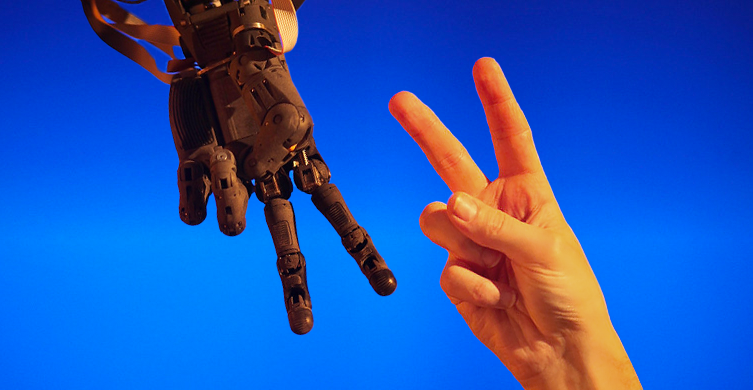
Janken
Is it possible to win 100% playing the millennia-old game of Rock, Paper, Sissors? A new Janken robot (Janken is the Japanese name for Rock, Paper, Scissors – why is the West stuck with a French name for an ancient Egyptian game? It’s a mystery of linguistics) can win against humans without fail.
The Janken robot instead uses super-fast vision, according to its creators in the Ishikawa-Oku Laboratory at the University of Tokyo. The Janken robot’s high-speed vision system analyzes the position and the shape of the human hand and, because it can act in 1 millisecond, it recognizes whether rock, paper or scissors is being played and successfully counters it. It can’t lose. Think you will just change your mind? What about 1 millisecond do you not understand?
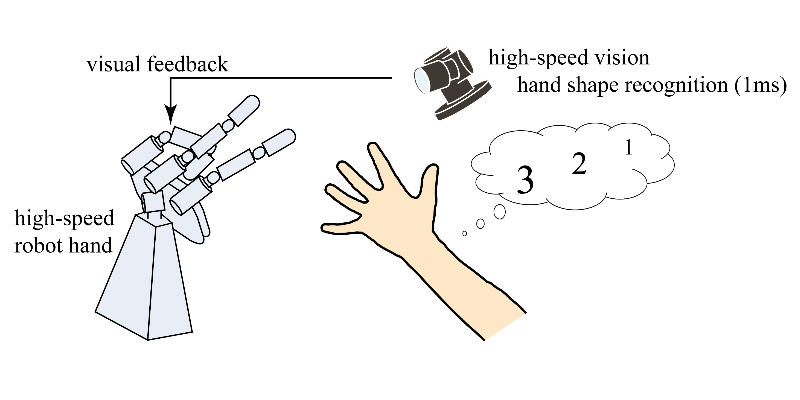
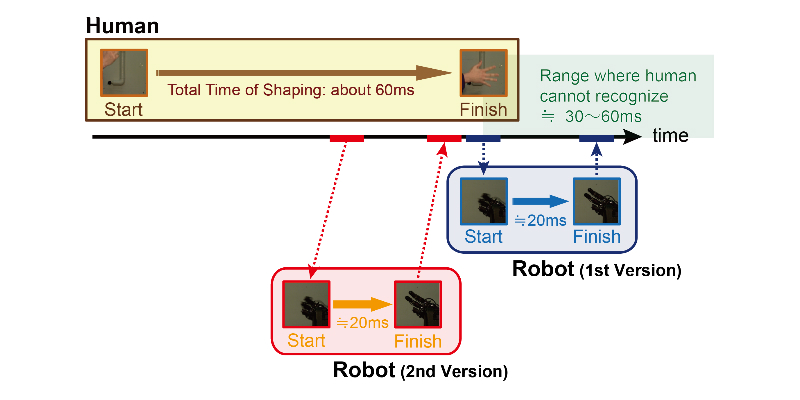
The janken robot is basically using the wrist angle as a tell, one that turns out to be the biggest tell of all for winning every time. It’s amazing that a 1-millisecond advantage that provides predictions with 100 percent accuracy can be derived from a measurement of the wrist angle. But there’s a good reason why humans can’t analyze wrist angles to pull off the same feat. We’re just too slow at making predictions.
You might also like

Violin-Playing Robot
On December 6th, 2007 Japanese auto giant Toyota introduced a new robot called Violin-Playing Robot. The name was not an accident. The robot could play the violin as part of
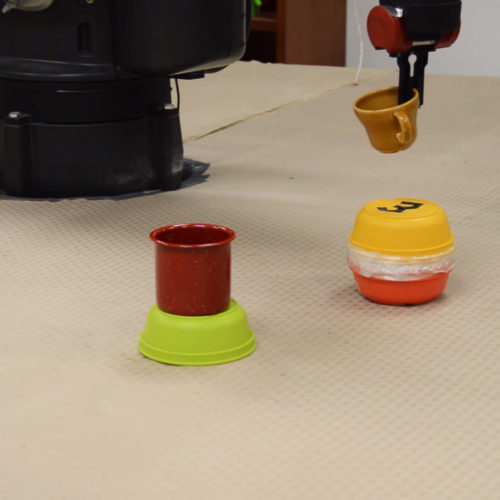
Robots can learn from one another!
Robots can teach each other new tricks! Thanks to RoboBrain – central repository of algorithms – behaviour learned by one robot can be transferred and learned by other robot. First
Is Denmark the New Home of Robotics?
For most people, Denmark most likely doesn’t even come to mind when debating which country is currently making huge strides towards a very robotic and automated future, and who can