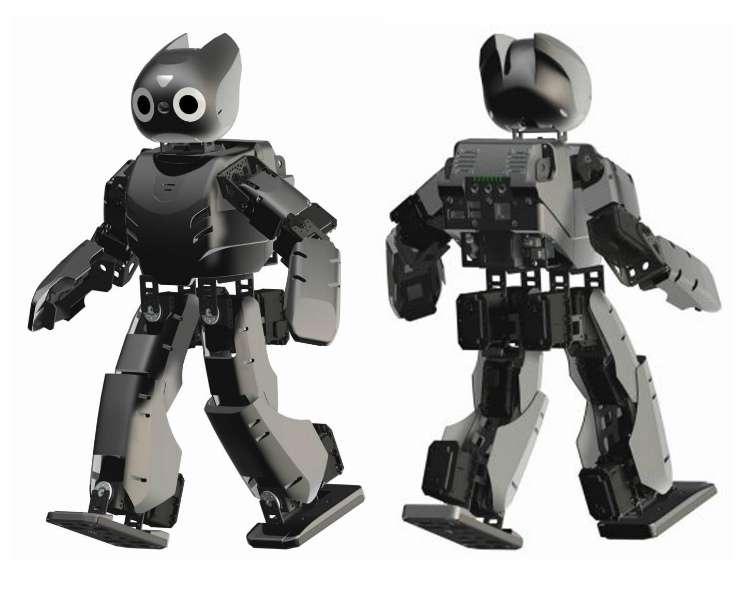
ROBOTIS DARwIn-OP
The ROBOTIS DARwIn-OP Advanced Humanoid Robot Deluxe Edition is an affordable, miniature-humanoid-robot platform with advanced computational power, sophisticated sensors, high payload capacity, and dynamic motion ability to enable many exciting research and education activities.
Furthermore the model is fully calibrated and thus features realistic physics (including masses, inertia, friction, self-collision, etc. To program the DARwIn-Op robot, it is possible to connect to the robot through a network cable or by Wifi. The open source hardware is not only user serviceable thanks to its modular design, but also can be fabricated by the user. Publically open CAD files for all of its parts, and instructions manuals for fabrication and assembly are available on-line for free.
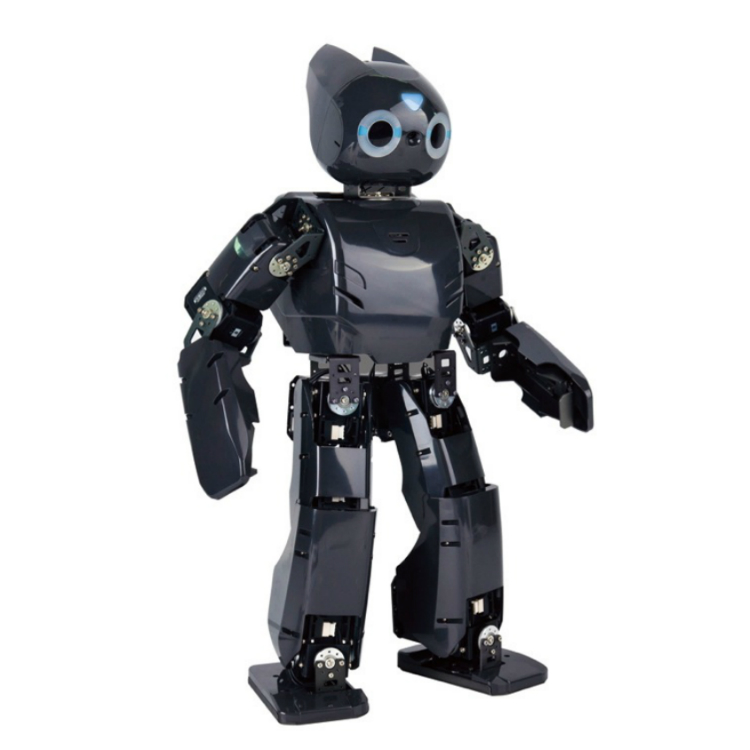
The Darwin-OP robot is an affordable programmable humanoid robot made by Robotis, the well known company for its various personal robotics brands. Darwin-OP robot has been designed by Romela lab at Virginia tech. This humanoid robot is fully open-source and can be programmed by various softwares. Darwin-OP robot is an ideal platform for teaching and research. A number of DARwIn-OP units will be fabricated and built by Robotis Co. for distribution to 11 partner universities (including major research universities, RUI institutions, a women’s college, and two local high schools.
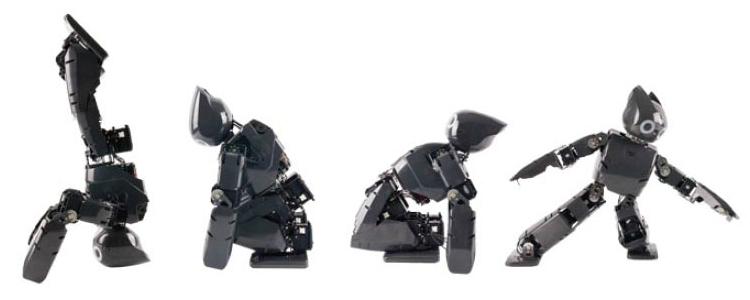
Performance and general characteristics of Darwin-OP robot:
Height: 45,45 cm
Weight : 2,9 kg
Main processor Intel Atom Z530 at 1,6Ghz, 4GB flash SSD memory
Controller CM-730 with ARM Cortex M3 at 72Mhz
Default walking speed : 24cm/s
Default standing up time from ground (from facing down) : 2.8 s
Default standing up time from ground (from facing up) : 3.9 s
This little robot is the only representative of what is probably the future of robotics: the fusion of robotics and the open-source.
You might also like
Can We Control Killer Robots?
Autonomous weapons are cheap to produce, and they can be fast. Often referred to as killer robots there is some concern about their ability to value human life. Many people
Another Step Forward For SpotMini
Boston Dynamics has progressed even further with SpotMini, now it will open doors to lets its friends through. The company is well known for producing robots that can walk, run,
The Past and Future of Bomb Disposal Robots
The Past of Bomb Disposal Robots In the British army, one of the most undesirable jobs to do with the defense of the country is that of the ammunition technical